
In today’s competitive landscape, maintaining an efficient and eco-friendly service operation is crucial for business owners, particularly in the car wash industry. Scrubby’s Car Wash, located in Bozeman, Montana, exemplifies this approach with its innovative automated solutions and a strong commitment to environmental responsibility. This article delves into the various aspects that make Scrubby’s a standout model for business practices. From its convenient location and operating hours to the cutting-edge technology used for cleaning, the dealership’s focus on sustainable practices, and its enhanced customer experience, business owners can glean valuable insights that apply directly to their operations. By examining each aspect in detail, we aim to illuminate how Scrubby’s Car Wash integrates quality service with operational excellence.
Spotlight in Bozeman: Locating Scrubby’s Car Wash and Reading Its Operating Rhythm

Bozeman in the early light has a shape and a pace that make a drive-through car wash feel almost like a civic ritual—efficient, quiet, and purposeful. The address at 1303 N 7th Ave sits along a corridor that blends residential blocks with small businesses, a pocket of activity that starts to hum as the sun climbs. There, Scrubby’s Car Wash has positioned itself not merely as a utility but as a point of exchange between the daily demands of Bozeman life and the brand promise of a cleaner, shinier ride in moments. The storefront line is clean and unadorned, with signage that hints at a refined confidence rather than spectacle. The building itself is streamlined for traffic flow: wide entry lanes, clear directional cues, and a rhythm that makes the act of turning a key, rolling forward, and leaving with a fresh finish feel almost ceremonial, in the sense that it respects both the car and the time its driver is willing to spare. In a town where outdoor and indoor lives coexist—ski trails, coffee shops, and university spaces—the location feels intentional, a place where a quick wash can be accomplished without detours or delays, no matter the season. The address functions as more than a point on a map; it is a quiet anchor in the weekly routine of many residents who value speed paired with care. The lot’s surface reflects a practical mindset: it’s designed for durability, easy maintenance, and quick turnover. This is not a showroom meant to dazzle with flashy bells and whistles; it’s a workshop of efficiency where the goal is a spotless result in as little time as possible, without sacrificing the condition of the vehicle’s paint. The name Scrubby, playful in its cadence, carries a paradox that’s core to the Bozeman experience: the wash is touchless, but the care is tangible. The brand leans into a core action—the scrubbing motion—while delivering a method that keeps the ride pristine through automation rather than manual friction. In this sense, the location and its hours are less about a storefront’s personality and more about a service rhythm that aligns with how people move through the day. Shoppers, commuters, students, and visitors converge at different moments, and the shop’s operational model is calibrated to meet them where their schedules permit. The building’s glass reflects a town that cares about efficiency—clean lines, minimal noise, and a process that promises cleanliness without the risk of marring a delicate finish. This is the geography of ease, where a car can enter with a dull sun glare or a thawed remnant of winter road grime and depart with a finish that looks renewed, almost as if the momentary loss of polish had never occurred. To observe this approach is to glimpse a philosophy of service that emphasizes speed without haste, technology without intimidation, and a consumer experience that is transparent and predictable. The hour-by-hour cadence mirrors the seasons of Bozeman itself. The schedule—Monday through Saturday from 8:00 AM to 6:00 PM, with Sunday slightly later, opening at 9:00 AM and closing at 5:00 PM—reads like a map of community rhythms. Weekdays tend to carry a steady trickle of vehicles as people begin their mornings and move toward work, school, or errands, while the late afternoon hours accommodate those who are wrapping up the day and want a quick, reliable refresh before dinner or after an outdoor activity. On Sundays, the extended afternoon window accommodates a different tempo: families, weekend travelers, and those who prefer a lighter pace can slide in after a late breakfast or a morning of rest, knowing the wash will be finished with the same meticulous care. These hours, straightforward and consistent, serve a broader purpose beyond convenience. They create predictability in a world that often feels hurried and uncertain. A customer can plan a stop as part of a routine—as an oil change for another car maintenance task or as a simple reset on a weekend drive—without risking unexpected closures or dwindling services. The result is a quiet confidence: a promise that the car will be cleaned, protected, and ready to go in a time frame that fits into ordinary life, not extraordinary scheduling. What happens inside the tunnel, though, is where the real story unfolds. Scrubby’s emphasizes a touchless approach to washing, a method that relies on advanced automation to deliver a thorough cleanse while safeguarding the vehicle’s finish. The process moves with a measured calm that feels almost choreographed. High-pressure water jets, calibrated chemical treatments, and magnetic sensors that guide the wash sequence collaborate to remove grit, brake dust, and road film with minimal physical contact. This is not a sterile abstraction; it’s a repeatable, reliable sequence that translates into consistent results. The appeal of a touchless system, especially in a place that experiences wide temperature swings and variable road conditions, is not simply speed. It’s a guarantee that the finish will remain unmarred by abrasive scrubbing or human error. Paint protection is a silent but central consideration, one that drivers often fear when a wash is done in haste or with aggressive brushes. In this environment, the car meets a combination of precision engineering and controlled chemistry designed to dissolve contaminants without forcing contact where it isn’t needed. The car enters the wash and exits with a brightness that can renew the appearance of a weekend drive or the memory of a used-car lot. The staff at the site—though their visible footprint is small—plays an essential role in sustaining the machine-driven rhythm. Their presence is not about performing every action by hand but about supervising the flow, ensuring that the automated steps align with the car’s dimensions and the customer’s preferences. This partnership between human oversight and automated systems is a practical embodiment of contemporary service design: micro-interventions when needed, macro-precision otherwise. Between the mechanics and the perception of the process lies a broader message about sustainability. The business positions itself as environmentally mindful, aiming to minimize water use, reduce runoff, and optimize chemical application through targeted delivery. In practice, this translates into a system that recycles or recovers wash water where possible and uses formulations that are both effective and responsible. While a single wash cannot solve every environmental concern, the combination of efficiency, automation, and a disciplined approach to water and chemical use represents a thoughtful stance for a facility situated in a region where pristine landscapes demand care. The Bozeman locale, with its mix of outdoor recreation and everyday errands, makes such a stance resonate: people who want to protect their vehicles and the places they love understand that quick, dependable cleaning can be a small but meaningful act of stewardship. The location’s hours, the seamless integration of technology and service, and the deliberate attention to the finish all contribute to a narrative about modern car care. This narrative does not hinge on spectacle or sheer volume; it rests on clarity—clear signs, clear expectations, and a clear promise that a routine stop can lift a car’s appearance and a driver’s mood in the same breath. In the chapter of Bozeman’s retail and service landscape that Scrubby’s inhabits, the car wash becomes a node of reliability. The address, the schedule, and the in-tunnel choreography cohere into a simple premise: when you need your vehicle refreshed, you can count on a place designed to move at human speed and still deliver professional results. This is the essence of the experience—the quiet efficiency that makes a quick wash feel almost effortless, and the care with which the system protects what matters most: the car’s appearance, the driver’s time, and the community’s trust. As the day unfolds and the sun shifts across the Montana sky, the Bozeman lane remains ready for the next customer, the next vehicle, the next clean finish. The rhythm endures because it respects a shared value—the belief that a fast wash can be both effective and gentle, a few minutes that leave more time for the road ahead. External resource: https://scrubbyscarwashes.com
Inside Scrubby’s: The Tech Behind the Contactless Car Wash
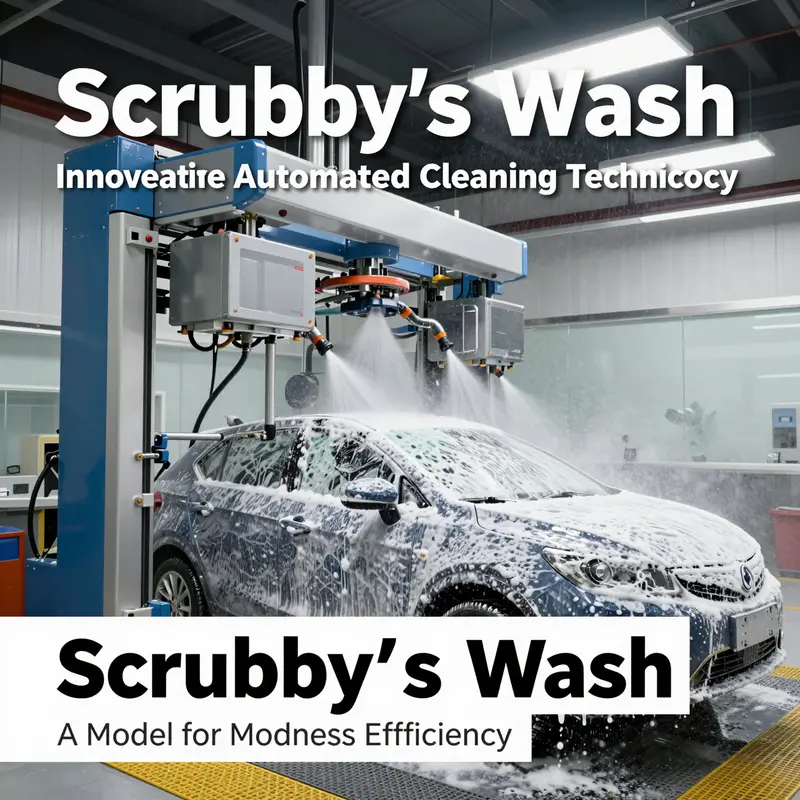
Bozeman, Montana, is a town where winter light, traffic, and outdoor life shape daily rhythms. At the edge of town, Scrubby’s Car Wash sits at 1303 N 7th Ave, designed for speed without sacrificing care for the finish. This chapter peels back the engineering behind the fully automated, contactless wash that promises speed, precision, and efficiency. The core idea is simple: wash fast, with consistent results, and reduce wear on the paint while conserving water and energy. The machine choreography is the key: sensors detect the vehicle, the guider tracks its path, and the wash programs adapt to the size and contours of each car. High pressure jets deliver the cleansing force, while a precise spray of detergents coats panels evenly. In contactless mode, the wheels, doors, and roof receive targeted treatment via programmable spray patterns, avoiding physical contact that could scratch delicate finishes. The alternative brush system can be effective but increases the risk of micro-scratches for certain shapes, so Scrubby favors touchless as the default.
Behind the visible performance lies a network of subsystems. A modern automated wash uses sensors, motorized conveyors, and sealed housings to keep out dust. A user touches a screen to pick a wash program, then the system guides the car through stages: rinse, soap, rinse again, and dry. The interface is designed for simplicity, yet the calibration under the hood is precise: water pressure, chemical dosing, and nozzle trajectories are tuned for a broad fleet of vehicles. The objective is consistent results across different cars so the next client sees the same level of care as the previous one.
Durability matters in a climate like Bozeman. The wash bay is built with corrosion resistant materials and seals that stand up to detergents, minerals, and seasonal temperature swings. Reliability translates into on time starts and predictable durations, which reduces queues and encourages repeat visits. In a busy town where time is valuable, every minute saved matters.
Beyond the mechanics, sustainability informs every choice. Modern touchless systems minimize runoff and optimize water use. Some facilities approach zero residual water at the end of each cycle, leaving surfaces dry and ready for the next step. In practice, this reduces water use and lowers operating costs over time, while protecting local resources. The cleaning agents are formulated to lift grime without leaving streaks, and the drying phase is tuned to reduce water spots and speed up turnaround.
Economics follow the physics: automated lines can handle high throughput with limited direct labor, freeing staff to supervise, maintain, and assist customers. Consistency in outcome builds trust and repeat business, because customers know what to expect each visit. Scrubby’s approach demonstrates how automation can scale clean and safe finishes for a high volume setting, combining careful control with modularity so upgrades and refinements can happen without disruption.
Looking ahead, advances in sensor technology, machine learning, and closed loop water management promise further gains. For a city like Bozeman, where seasonal drivers matter, the system can adapt to salt, mud, and freeze cycles without compromising finish quality. Scrubby’s touchless model aims to stay a step ahead of customer expectations while protecting the vehicle’s integrity and the environment.
In essence, Scrubby’s automation is more than a gimmick; it is a reflection of how a well designed car wash can deliver speed, reliability, and care. The next part of this article will explore how the technology informs service design, environmental responsibility, and the community footprint of a modern wash facility. For readers curious about the broader technical landscape behind these systems, external sources provide deeper dives into touchless automation and its benefits.
Gleam with a Conscience: The Eco-Driven Engine Behind Scrubby’s Car Wash

The clean shine on a passing sedan in Bozeman often carries a quiet, unseen story. In a town framed by the fading greens of willow and the crisp breath of the mountains, Scrubby’s Car Wash has carved out a distinct way of doing business. The chapter that follows doesn’t just map out a set of procedures; it traces a current that runs through every wipe of their no-contact wash—an awareness that speed and sustainability can share the same lane. From the street of 1303 N 7th Ave to the heart of the company’s daily rhythms, the commitment to the environment is not a marketing tag but a living discipline. Scrubby’s is not attempting to reinvent the car wash so much as reorient what a modern wash can be in a landscape that increasingly values responsibility as much as efficiency. The result is a service that cleans with care for today’s needs while protecting tomorrow’s resources, a balance that resonates in the way a car emerges from the tunnel, gleaming and somehow lighter on the earth at the same time. This is the texture of their approach: precise, methodical, and unshowy, yet quietly ambitious in its implications for the community and for local waterways that put a premium on clean water and clean air.
The most visible thread in Scrubby’s environmental tapestry is the water loop—an engineered system designed to capture, filter, and reuse the majority of the water that flows through each wash. It is easy to underestimate the consequences of a car wash’s demand on a region unless you have stood by the filtration bays and watched the cycle. Here, water is not treated as an expendable resource but as a precious input that must be conserved. The shop’s systems reclaim and recycle up to ninety percent of the wash water, turning what would otherwise become wastewater into a resource that can be recirculated again and again. In practice, this means that a large portion of the water used during a busy day is reintroduced into the process, minimizing fresh-water withdrawals and reducing the risk of runoff that could carry detergents toward streams or ponds. The underlying logic is simple: less fresh water used means less energy spent heating, less chemical load entering the environment, and a smaller carbon footprint tied to water production itself. The effect is not merely ecological; it is economical and practical, allowing the facility to sustain high throughput without compromising the waterways that support local wildlife and the garden city aesthetics the area values.
Equally central to Scrubby’s environmental profile is the choice of cleaning agents. The firm’s commitment to biodegradable, phosphate-free cleaning solutions aligns with a broader responsibility to protect aquatic life and downstream ecosystems. In many regions, phosphates from cleaning products have contributed to algal blooms and oxygen depletion in lakes and rivers. Scrubby’s approach reduces that risk by selecting formulations designed to break down safely in waterways and to be gentle on the delicate balance of local waters. The emphasis on eco-friendly chemistry does more than guard the health of streams; it helps safeguard the very essence of the community’s recreational and natural habitats. It is a reminder that the polish on a vehicle can coexist with patience for the living systems that make Bozeman’s surrounding landscapes so memorable. Even as the friction of the wash is in service to speed—leveraging automated, high-throughput equipment—the chemistry remains deliberately restrained, ensuring that rapid cleansing does not come at the expense of long-term environmental health.
Energy efficiency threads through the plant’s design as well. Scrubby’s has invested in lighting and equipment that sip power instead of gulping it. Energy-efficient lighting reduces waste heat and lowers operating costs, contributing to a cooler interior state that is easier on both workers and customers. More broadly, the equipment itself is chosen for efficiency: pumps, conveyors, and motors that operate with precision and minimal draw. The effect is twofold. First, there is a direct reduction in energy use, which translates into a smaller carbon footprint for each car that passes through. Second, the more efficient the system, the more consistently the shop can maintain fast service without compromising environmental standards. The sense is of a machine that respects the tempo of a busy day while quietly keeping its emissions in check, letting speed and stewardship coexist rather than compete.
Among these efficiencies, solar energy stands as a defining line in the sand for Scrubby’s environmental journey. Across several locations, solar panels gather sunlight and convert it into electricity that powers the wash. The shift toward on-site generation reduces dependence on fossil-fuel electricity and helps to smooth the energy demands of a rapid, high-volume operation. In practical terms, solar power means fewer emissions associated with grid electricity and a quieter, more predictable energy supply that supports consistent wash quality. It is a symbol as much as a technology: a pledge that a brisk, efficient wash can be powered by clean energy, turning a routine service into a modest yet meaningful statement about the kind of future the business envisions. For customers, the visible solar arrays are not only a reminder of modernity; they serve as an assurance that every clean ride carries with it a shared investment in cleaner air, vivid skies, and the landscapes of Montana.
What ties these systems together is a philosophy that ecological care does not erase speed or value; it enhances them. Scrubby’s recognizes that the best way to grow a responsible business is to weave sustainability into every decision, from process design to daily routines behind the bays. This is not about quick slogans but about building a structure that survives the pressures of a demanding market while remaining faithful to a promise of environmental stewardship. The outcomes matter beyond the gleam on a customer’s bumper. They shape how employees view their roles—how training becomes ongoing, how maintenance becomes a shared responsibility, and how the team approaches problems with a mindset trained to protect resources rather than deplete them. The outcome also factors into the customer experience. People are more willing to return when they sense that the company shares their values, that a clean car and a clean planet can be pursued in parallel for the same hour of the day.
Of course, a system that emphasizes reuse and reduced chemical load is not without its challenges. It requires careful maintenance, constant monitoring, and regular calibrations to ensure that filtration systems remain effective and that the water quality meets the standards necessary for repeat use. It also means staying vigilant about the chemical balance so that cleaning performance remains high without compromising environmental safety. Scrubby’s does not shy away from these burdens; rather, it treats them as ongoing commitments. The business case follows: by optimizing water use and energy efficiency, the shop can deliver the speed customers expect while keeping operating costs in line with its environmental aims. The combined effect is a resilient model that can adapt to seasonal fluctuations, changing regulatory expectations, and evolving customer preferences without losing its core purpose—delivering a reliable, high-quality clean that honors the land it serves.
This integrated approach to cleanliness—paint-safe automated systems, water-conscious workflows, eco-friendly chemistry, energy-smart infrastructure, and on-site solar generation—creates a narrative that customers feel as they pull into Scrubby’s. It is a narrative reinforced not by slogans but by tangible practice: a water loop that reduces reliance on fresh resources; a chemical regime that respects waterways; lighting and motors that conserve energy; and solar power that demonstrates leadership in the face of a future where resource efficiency is non-negotiable. The chapter of Scrubby’s that unfolds in Bozeman is less about a single breakthrough and more about a coherent, practiced discipline. Every wash becomes a micro-lesson in stewardship, a reminder that a pristine finish can be achieved with a lighter touch on the planet. The brand embodies a conviction: speed and sustainability are not opponents but partners, each enhancing the other in the steady venturing forward that defines Scrubby’s operating ethos.
When customers think about the next time they will visit, they might not itemize the exact filtration stages or the precise energy reductions at work. Still, they will sense a continuity—the sense that the business intends to honor both the needs of its clients and the needs of the community. The effect is more than just incremental savings; it is cultural, public-minded, and durable. In a region where responsibly managed water and healthy ecosystems are part of the daily conversation, Scrubby’s stance aligns with local values and the broader expectation that services can be fast, effective, and environmentally responsible at once. The boons are incremental but real: cleaner waterways, quieter plant operations, and a public that witnesses a business that treats stewardship as a core capability rather than a peripheral virtue. In the end, the gleam on the car is a reflection of a broader glow—an ethos that the world’s most practical comforts should never come at the expense of the world itself.
For readers seeking a closer look at the specifics of Scrubby’s environmental responsibility, the official resource lays out the framework behind these initiatives, detailing how the practices translate into everyday operations and long-term impact. This is not about marketing promises; it is about translating environmental values into an actionable, repeatable business model that can guide future growth and inspire similar efforts elsewhere.
External resource for further details on Scrubby’s environmental responsibility: https://www.scrubbyscarwash.com/environmental-responsibility
null

null
Final thoughts
Scrubby’s Car Wash serves as a prime example of how modern businesses can innovate and thrive in today’s service-oriented industry. With its strategic location and customer-focused operating hours, cutting-edge automated cleaning technology, dedication to environmental sustainability, and a strong emphasis on enriching customer experiences, Scrubby’s presents a compelling case for business owners seeking to elevate their own operations. By adopting similar practices, businesses can not only enhance their service delivery but also contribute positively to the environment and customer satisfaction. The lessons learned from Scrubby’s can help any car wash or service-based business carve out a competitive advantage in a crowded marketplace.