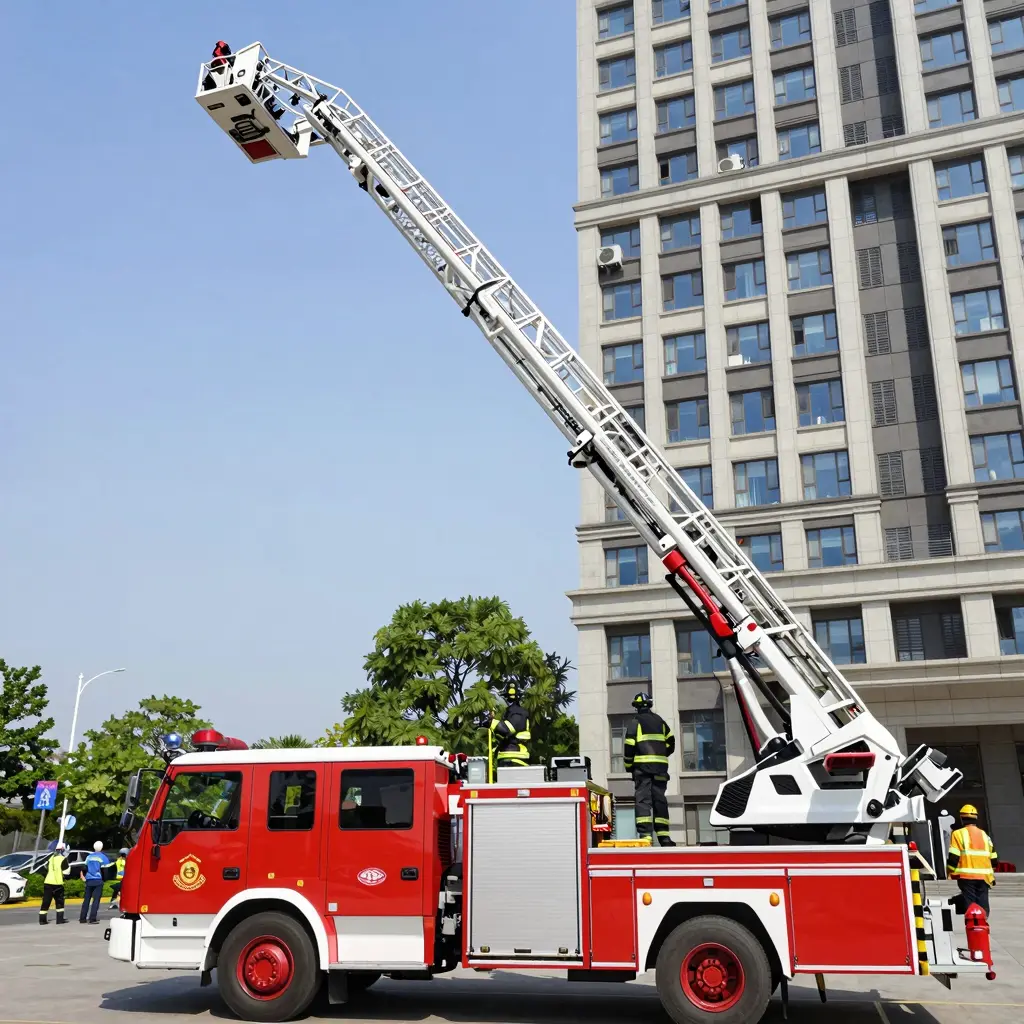
In the realm of emergency response, fire safety stands as a crucial pillar in safeguarding lives and properties. This importance is underscored by the rapid advancements in fire truck technology, particularly with tools designed to combat fires in towering structures. At the forefront of this innovation is the tallest fire truck ladder, a marvel of engineering that extends capabilities to unprecedented heights. These ladders are not just vital equipment; they epitomize the integration of cutting-edge technology with essential safety measures. Equipped with features such as automated controls and enhanced stability, they offer greater efficiency and effectiveness in emergency situations. As we delve into the specifications and advantages of the tallest fire truck ladder, we will explore how modern fire safety equipment transforms firefighting, ultimately leading to improved outcomes in urban landscapes.
For more details on the types of fire trucks involved in such advancements, you can check out fire truck technology innovations and explore various models of fire trucks that include these tall ladders here.
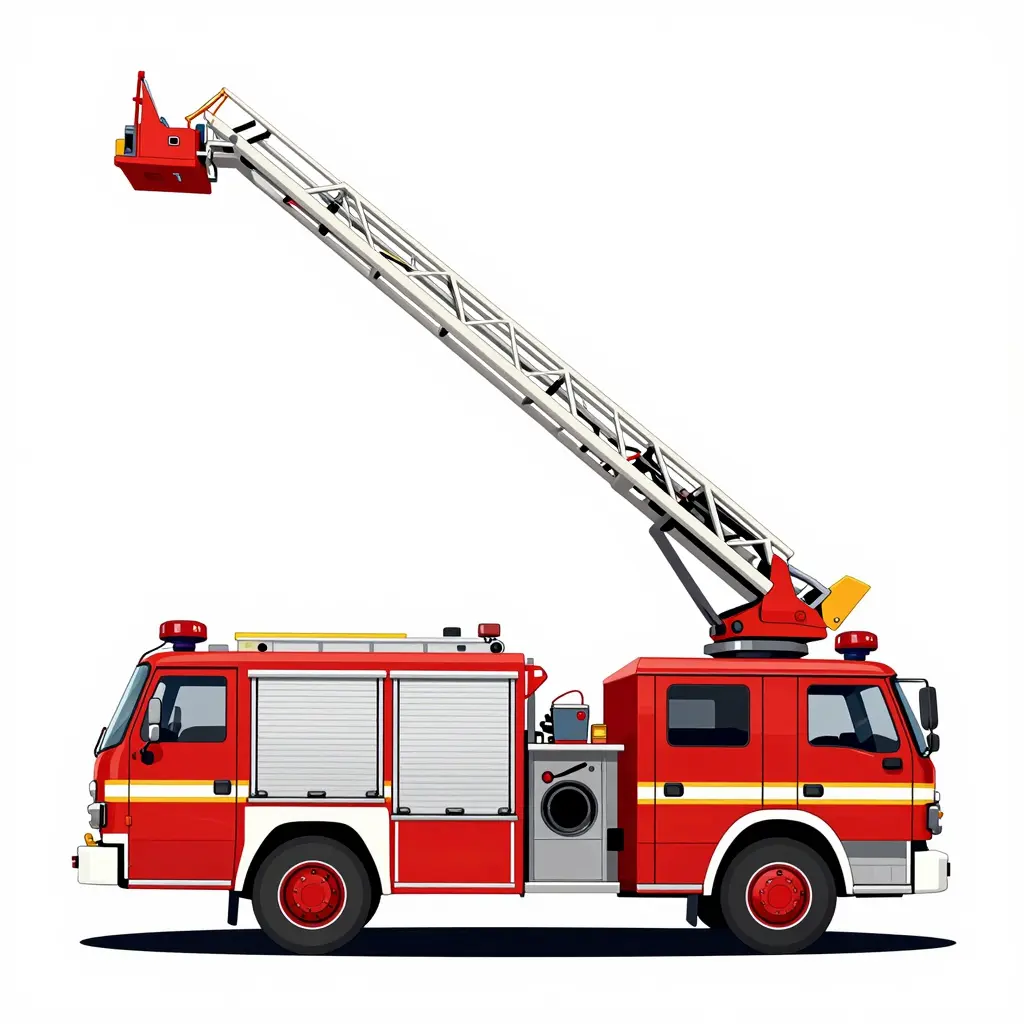
The Evolution of Fire Truck Ladders: From Historical Beginnings to Modern Advancements
The history of fire truck ladders is a fascinating journey that reflects the evolution of firefighting techniques and technologies. It spans from the rudimentary tools of the 19th century to the sophisticated, safety-oriented equipment used today. Understanding this evolution not only highlights the impressive mechanics behind modern fire fighting but also underscores the importance of safety and efficiency in protecting lives.
Early Beginnings
The roots of fire truck ladders date back to the early 1800s with the introduction of manual hand ladders mounted on horse-drawn carts. Early fire departments utilized these rudimentary wooden ladders to access buildings, but they were limited in height and often cumbersome to deploy. The physical exertion required to operate them also posed significant challenges during emergencies.
Key Milestones:
- Introduction of Hand Ladder Trucks (1800s)
- Technology Used: Manual ladders, horse-drawn vehicles
- Early fire departments relied on manually operated ladders for building access.
- Development of Extension Ladders (Late 1800s)
- Technology Used: Telescoping manual ladders
- Improved designs allowed greater reach, enabling firefighters to tackle higher floors more effectively.
- First Motorized Fire Apparatus (1899)
- Technology Used: Internal combustion engine
- The American LaFrance company introduced motorized fire engines that replaced horses, enhancing response times significantly.
Technological Advancements
The significant turning point in fire truck ladder technology occurred in the early 20th century with the development of rotating aerial ladders. This advancement allowed for increased flexibility and access to various sides of a building.
Notable Innovations:
-
Invention of Rotating Aerial Ladders (Early 1900s)
-
Introduced manual or mechanical controls for improved positioning.
-
Introduction of Hydraulic Systems (1950s)
-
Enabled smooth and efficient ladder deployment, replacing the need for manual mechanisms.
Modern Advancements
As firefighting needs grew, so did the complexity and functionality of fire truck ladders. Modern innovations include:
-
Modern Aerial Platforms (1960s-1970s)
-
Featuring articulated booms and elevated work platforms, these designs provide unprecedented height and stability for urban firefighting.
-
Integration of Computer-Aided Control Systems (2000s)
-
Sophisticated electronic sensors monitor ladder stability, ensuring safer operations.
-
Use of Lightweight Composite Materials (2010s-Present)
-
Advancements in materials such as carbon fiber have resulted in lighter, more maneuverable ladders that maintain strength and durability.
-
Implementation of Remote-Controlled Ladder Operations (2020s)
-
Some modern fire trucks now feature remote operations, which allow safer distances during hazardous conditions.
Conclusion
The evolution of fire truck ladders illustrates not only technological progress but also a commitment to safety in firefighting. These advancements enable firefighters to respond quickly and effectively to emergencies, ensuring the safety of both the firefighters and the communities they serve. For business owners looking to understand the capabilities of modern firefighting equipment, such as aerial fire trucks and advanced ladder systems, the history provides invaluable insight into the tools that save lives today.
| Manufacturer | Model | Max Height | Full Extension Time | Notes |
|---|---|---|---|---|
| Rosenbauer | Aerial Ladder 112m | 112 meters (367 feet) | Not specified | Tallest firefighting ladder in the world, designed for ultra-high-rise rescues. |
| Zoomlion | DG113 110m | 110 meters (361 feet) | Not specified | Autonomous model primarily for urban use in China. |
| Pierce | Aerial Platform 100′ | 30.48 meters (100 feet) | Not specified | Common in North America, versatile for various applications. |
| Magirus | M32L-A 32m | 32 meters (105 feet) | Not specified | European model, known for its modular design. |
| E-ONE | 100′ Quint | 30.48 meters (100 feet) | 60 seconds | Combines pump and aerial capabilities. |
The Importance of Ladder Height in Firefighting
In firefighting, the height of the ladder is a critical factor that significantly impacts operational effectiveness, safety, and the overall success of rescue missions. As business owners, understanding the significance of ladder height is essential, especially if your operations are located in urban areas where high-rise buildings are prevalent.
Reach
The primary function of a fire truck ladder is to provide reach to high places. Modern aerial ladders can extend beyond 100 feet, enabling firefighters to access upper floors of high-rise buildings without having to navigate through smoke-filled stairwells. This capability is crucial during emergencies, as it allows for swift rescues and efficient firefighting operations. According to a study from the International Association of Fire Chiefs, ladders with greater height enhance the potential for successful rescues while minimizing exposure to hazardous conditions such as smoke and flames (source: IAFC).
Safety
Safety is paramount in firefighting operations. Taller ladders provide safer access to elevated structures, allowing firefighters to work from a secure position rather than climbing at an angle. The higher the reach, the more distance there is from falling debris or heat hazards. Aerial platforms, like those found on some fire trucks, offer added safety features including stabilization systems and enclosed platforms. This reduces the risk of accidents during high-stakes operations, ultimately making firefighting efforts more effective (source: Firefighting Equipment & Safety Journal).
Effectiveness
The effectiveness of firefighting operations is greatly influenced by ladder height. When firefighters can access upper levels directly, they can tackle fires more effectively, ensuring that water streams are accurately directed towards flames. Furthermore, having the right ladder height ensures that rescue operations proceed smoothly, preventing delays that could exacerbate dangerous situations. A study indicated that high-reaching ladders can reduce the complexity of rescue missions in crowded urban settings, where maneuvering larger apparatus can be challenging.
Conclusion
In conclusion, ladder height is a vital component in firefighting that enhances reach, safety, and effectiveness in emergency situations. As businesses operate within cities with increasing building heights, it’s essential to invest in fire trucks with appropriate ladder specifications to ensure optimal safety and operational success. For more information on the latest firefighting equipment, check out our range of ladder fire trucks to enhance your emergency response capabilities.
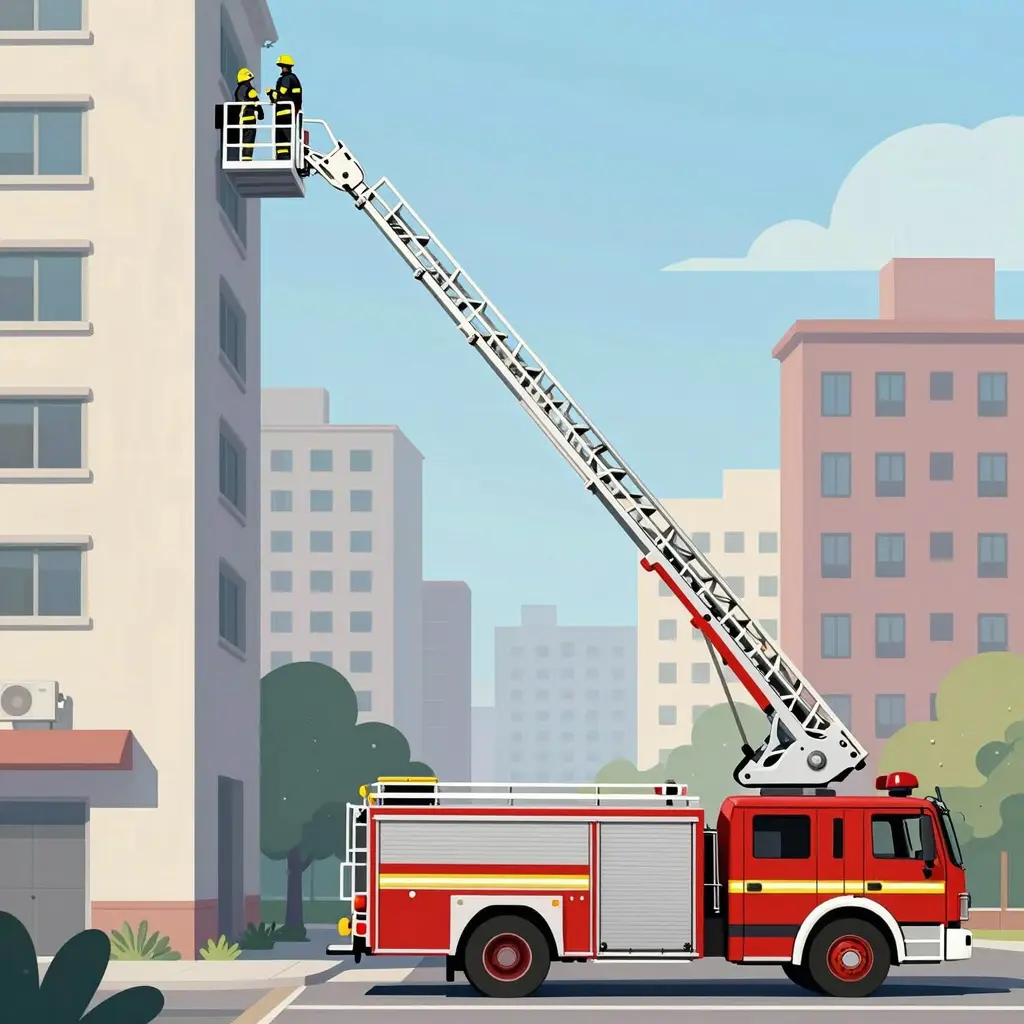
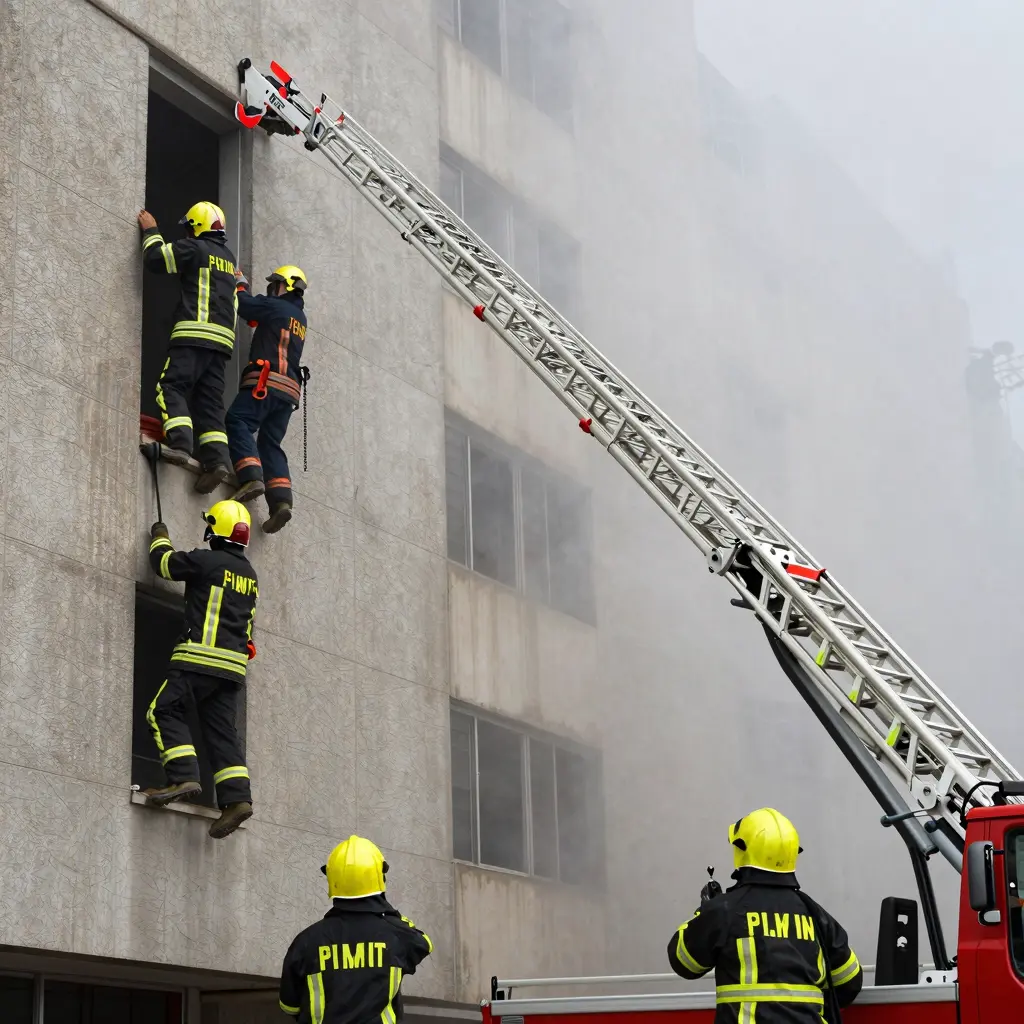
Tallest Fire Truck Ladders: Performance and Effectiveness Statistics
In firefighting, the performance of fire truck ladders is crucial for effective rescue operations, particularly in urban areas with high-rise buildings. The tallest fire truck ladders available today are designed to reach impressive heights, enabling firefighters to access upper floors of buildings quickly and safely. Here, we explore current statistics about these ladders, their deployment times, and their effectiveness in emergency scenarios.
Fire Truck Ladder Heights and Deployment Times
Recent innovations have led to the debut of ladders that reach up to 91 meters (approximately 300 feet). These advancements highlight how firefighting technology continues to evolve to meet modern challenges.
Based on recent findings, the deployment times for various ladder heights are as follows:
| Ladder Height (m) | Typical Deployment Time (seconds) | Notes |
|---|---|---|
| 50 | 60 – 90 | Standard for many urban fire departments; suitable for mid-rise buildings. |
| 68 | 75 – 105 | Common in larger cities and high-rise areas; requires more space for setup. |
| 91 | 90 – 120+ | Used for very tall structures; longer deployment times due to complexity and weight. |
Case Studies on Aerial Ladder Efficiency
- 68-Meter Fire Truck: Recent showcases at international fire equipment exhibitions have introduced fire trucks equipped with 68-meter ladders. These trucks can launch operations in just 2-3 seconds due to advanced hydraulic systems and stabilization technologies.
- Source: Chinese Fire Technology
- 91-Meter Aerial Ladder: The world’s tallest fire truck ladder stands at 91 meters, equipped for high-rise rescues, achieving significant operational readiness within 90 seconds. Such ladders deliver enhanced rescue capabilities, making them essential for combating fires in skyscrapers.
- Source: Global News Report
Effectiveness in Urban Firefighting
Effective fire response is facilitated by rapid deployment times of these aerial ladders. Fire departments employing modern ladders can significantly improve their overall response times, which is vital in emergency situations. For instance, studies indicate that urban fire departments aiming to meet a 90% response time benchmark typically achieve it within an average of 7 minutes and 30 seconds.
- Study Context: This benchmark underlines the importance of not just the ladder’s height but also its operational speed and readiness in emergency scenarios.
- Source: MDPI Study
Conclusion
The integration of advanced fire truck ladders is a significant step towards enhancing firefighting capabilities, especially in densely populated urban settings. Understanding the performance stats, such as deployment times and operational efficiency, can help business owners and fire safety planners allocate resources effectively.
For more on various firefighting equipment and technology, you can explore the latest in fire truck ladder designs and their applications.
Notable Manufacturers of Tall Fire Truck Ladders
-
Boluntai
Founded in 1988 and based in Tampere, Finland, Boluntai specializes in articulated aerial ladders, offering over 30 models that reach heights from 16 to 112 meters. Their products are customizable with more than 2,000 features, and the company has supplied over 6,200 units to 120 countries, making it a leader in the market. -
Rosenbauer
Renowned for its innovative solutions, Rosenbauer partnered with MAN Truck & Bus to launch the world’s first electric aerial ladder fire truck, the L32A-XS, which boasts a zero-emission platform. This vehicle is designed for urban environments, capable of responding to emergencies up to 23 meters high. Rosenbauer has set a standard for combining technology with firefighting efficiency. -
Oshkosh Corporation
Established in 1917, Oshkosh Corporation is a Fortune 500 company known for its specialized vehicles. Under its brands like Pierce and Oshkosh, the company manufactures a variety of fire trucks, including aerial ladder trucks and airport rescue vehicles. Their focus on advanced engineering ensures reliability and effectiveness in high-pressure firefighting scenarios. Learn more about Oshkosh fire trucks here.
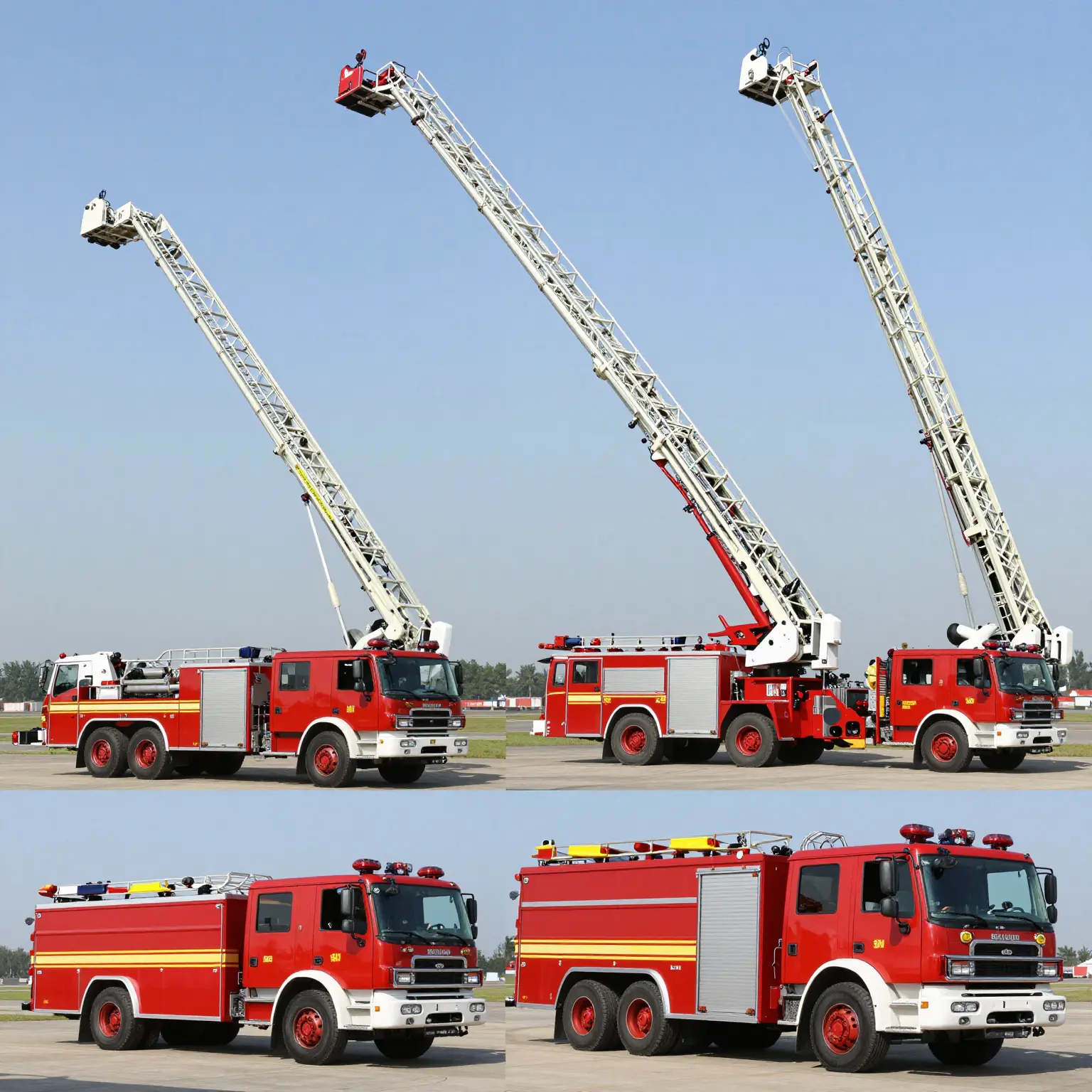
A collage showcasing different fire truck ladders from notable manufacturers.
These companies are at the forefront of developing tall fire truck ladders, providing essential equipment for firefighting and rescue operations. Their commitment to innovation and quality ensures that they meet the diverse needs of fire departments around the globe.
Ladder Usage Over Time
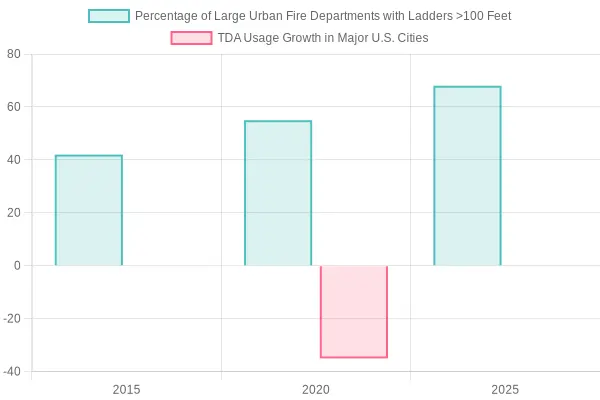
The usage of tall fire truck ladders has seen significant growth over the past decade, driven by urbanization and the need for effective firefighting capabilities in high-rise buildings. A chart illustrating this trend is shown below:
Key Trends:
- In 2015, 42% of large urban fire departments had ladders exceeding 100 feet.
- This figure increased to 55% by 2020.
- By 2025, 68% of these departments were using ladders over 100 feet, indicating a strong upward trend.
- Additionally, the usage of tractor-drawn aerials (TDAs) surged by 35% in major U.S. cities between 2020 and 2025 due to their superior reach and maneuverability.
This shift underscores the growing demand for advanced firefighting equipment as urban landscapes evolve.
For more information on various types of fire truck ladders, check out our product offerings.
Conclusion and Call to Action
In conclusion, the heights reached by modern fire truck ladders, such as the record-breaking Sany JP100, represent a significant leap forward in firefighting technology. With the ability to extend up to 159.66 meters (523.8 feet), these ladders not only facilitate effective firefighting in ultra-high-rise buildings but also ensure safety for firefighters and the public during rescue operations. The versatility in design, with options like aerial platforms that can accommodate rescuers and their equipment, highlights the importance of these vehicles in urban environments.
As businesses look to enhance their safety measures and emergency preparedness, investing in advanced fire truck solutions is paramount. If you’re a business owner considering upgrades to your firefighting equipment or looking for specialized fire truck solutions, we invite you to contact us on Zoomlion. Our team is ready to provide quotes and support tailored to your needs, ensuring you have the best tools available for effective firefighting and rescue operations. Don’t wait until it’s too late-reach out today to enhance your fire safety protocols!