
In the complex world of aviation, safety is paramount, and ensuring the protection of passengers, crew, and aircraft from fire hazards is a top priority for airport operators. This is where airport fire truck foam plays a critical role. Designed specifically to combat aviation fuel fires, this specialized foam not only enhances firefighting effectiveness but significantly reduces the overall risks associated with airport operations. For business owners in the aviation sector, investing in high-quality fire foam systems is not merely a compliance measure; it directly impacts operational efficiency and safety protocols. By prioritizing the right equipment, such as airport fire trucks, businesses can foster a safer environment while safeguarding valuable assets. In this blog, we will explore the multifaceted benefits of airport fire truck foam and how it can revolutionize safety standards within your airport operations.
Types of Fire Truck Foam Used in Airport Fire Trucks
Firefighting foam is a crucial element in the arsenal of airport fire trucks, primarily designed to combat fuel fires that can arise from aviation incidents. The types of foam used can greatly influence the effectiveness of firefighting efforts and the overall safety of airport operations. Here, we explore the primary types of foam utilized in airport fire trucks, focusing on Aqueous Film-Forming Foam (AFFF) and its alternatives that have emerged due to environmental concerns.
Aqueous Film-Forming Foam (AFFF)
AFFF has been the traditional choice for airport firefighting applications due to its ability to quickly form a film on the surface of flammable liquids, suppressing vapor release and preventing reignition. AFFF is particularly effective against Class B fires involving non-water-soluble flammable liquids, such as aviation fuels. Its advantages include:
- Rapid Surface Coverage: AFFF spreads quickly, allowing for immediate fire suppression.
- Vapor Suppression: The foam’s film minimizes the release of flammable vapors, which are crucial for preventing reignition.
- Effectiveness in High-Energy Fires: AFFF has demonstrated efficiency in extinguishing high-energy fuel fires, a common hazard in aviation environments.
However, AFFF contains perfluoroalkyl and polyfluoroalkyl substances (PFAS), which have raised significant health and environmental concerns, leading to regulatory scrutiny and phased bans in many jurisdictions such as the European Union and the United States.
Alternatives to AFFF
1. Fluorine-Free Foams (F3)
New fluorine-free foams have gained traction as viable alternatives to AFFF. These foams exhibit comparable extinguishing efficiency while mitigating environmental concerns. Key features include:
- Efficacy: Fluorine-free foams have been shown to perform nearly as well as AFFF in many scenarios, particularly in extinguishing alcohol-based and hydrocarbon fires. Studies have indicated that F3 foams can achieve rapid flame suppression and maintain extinguishing power without the legacy hazards associated with AFFF.
- Environmental Safety: They are designed to minimize ecological toxicity, making them suitable for use in sensitive environments like airports.
2. Hydrocarbon-Based Foams
These foams, specifically designed for use on hydrocarbon fires, provide another alternative. Their benefits include:
- Stability in High Heat: Hydrocarbon-based foams exhibit strong thermal stability, essential for combating high-temperature incidents.
- Lower Corrosivity: These foams are often less corrosive to metals and aircraft components, which is a significant advantage in airport settings.
Conclusion
The shift from traditional AFFF to alternatives like fluorine-free foams and hydrocarbon-based foams reflects a growing demand for effective and environmentally safe firefighting solutions. Business owners in the aviation sector must consider the type of foam in their firefighting apparatus, weighing the benefits of rapid extinguishing power against regulatory compliance and ecological integrity. For more information on firefighting vehicles equipped with these advanced foam systems, visit our selection of airport fire trucks.
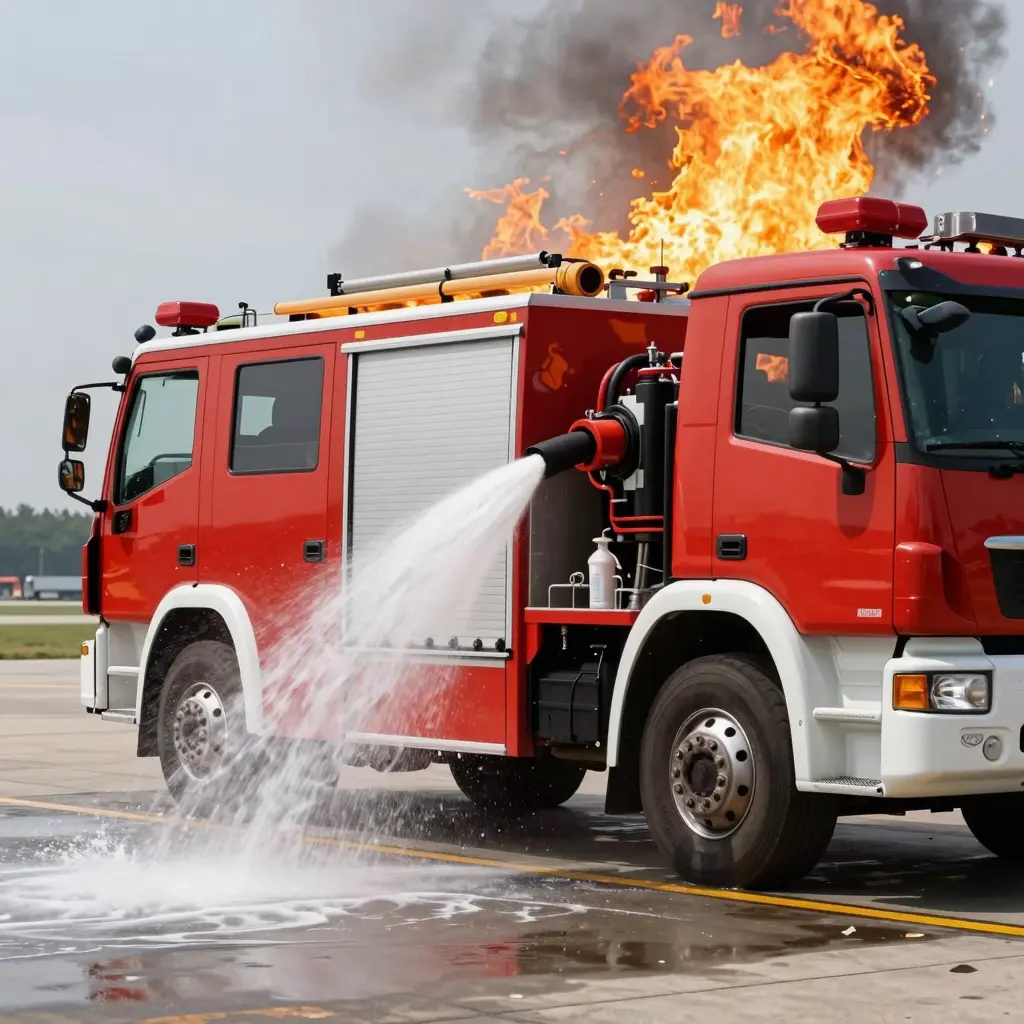
Key Benefits of High-Quality Foam for Airport Fire Trucks
Advanced foam solutions provide significant advantages in firefighting, particularly for airport fire trucks. Here are some key benefits:
1. Improved Fire Suppression Effectiveness
High-quality foams, especially Class B Aqueous Film-Forming Foams (AFFF) and newer fluorine-free alternatives, are designed to extinguish jet fuel fires effectively. They form a stable, self-healing film over burning fuels, which helps prevent reignition and reduces the risk of flashover. According to sources such as Fire Engineering, these foams provide superior cooling and oxygen exclusion compared to water alone. This capability is crucial for rapidly containing severe fire scenarios encountered at airports where jet fuel is involved.
2. Environmental Safety
Modern foam formulations are increasingly designed to comply with environmental regulations regarding PFAS (perfluoroalkyl substances). For instance, fluorine-free foams offer high performance without harming the environment, featuring faster biodegradation and lower toxicity levels. The switch towards these foam types protects airport ecosystems and aligns with global environmental standards, while minimizing damage to aircraft and sensitive equipment. Research by the National Institute of Standards and Technology (NIST) confirms that high-performance fluorine-free foams exhibit strong anti-reignition properties, enhancing environmental safety in firefighting operations.
3. Operational Efficiency
Advanced foam systems enable faster response times and can be integrated with existing airport fire truck systems without extensive modifications. High-capacity foam storage tanks and automated foam proportioners optimize foam use, reducing waste and ensuring efficient coverage during critical fire response situations. The capabilities of these modern systems extend beyond just fire suppression, allowing for effective cooling of equipment and minimizing the overall fire damage. As highlighted in the International Civil Aviation Organization (ICAO) safety reports, this efficiency is paramount in emergency situations to safeguard assets and improve overall operational readiness.
In conclusion, utilizing high-quality foam in airport fire trucks not only enhances fire suppression effectiveness but also ensures environmental safety and operational efficiency, making it an indispensable asset for airport emergency response personnel.
Comparative Table of Foam Types in Airport Fire Truck Operations
| Foam Type | Applications | Advantages | Disadvantages |
|---|---|---|---|
| Aqueous Film-Forming Foam (AFFF) | Flammable liquid fires (gasoline, diesel) | – Rapid extinguishment – Excellent anti-reignition |
– Contains PFAS – Environmental concerns |
| Alcohol-Resistant AFFF (AR-AFFF) | Polar solvent fires (alcohols, ketones) | – Forms a protective gel layer – Superior performance for water-soluble fuels |
– Costlier than traditional AFFF |
| Fluoroprotein Foam | Oil tank fires | – Good thermal stability – Better flow than protein foam |
– Slower extinguishment – Environmentally persistent |
| Synthetic Foam | Versatile applications in high saline or cold | – Good cold-weather performance – Adaptable to various fire scenarios |
– Costly – Shorter drainage time |
For more information on firefighting equipment, visit CIMC Fire Truck. You can also explore airport fire truck solutions for specific needs.
User Testimonials on High-Quality Firefighting Foams
Airports and firefighting experts are increasingly sharing their positive experiences with high-performance firefighting foams in operations. These testimonials highlight the effectiveness and safety of modern foam technologies, particularly the transition to fluorine-free options.
Denver International Airport
Michael Thompson, the airport fire chief, explained that after a year-long trial of a fluorine-free foam, they observed “excellent stability and rapid spread” during aircraft crash simulations. This foam not only met performance expectations but also aligned with environmental goals, leading the airport to plan for a full transition to this foam by 2027. Read more about Denver International Airport.
Los Angeles International Airport
Fire Marshal Robert Chen at LAX reported that the airport had upgraded to a next-generation firefighting system, utilizing a high-performance, non-fluorinated foam. He noted a “superior flash point resistance” that resulted in a 40% reduction in annual maintenance costs associated with system corrosion. The airport has experienced significant efficiency improvements, allowing for faster response and cleanup times after incidents. Explore LAX’s innovative system.
Fire Safety Experts Speak Out
Dr. Elena Martinez from the FAA’s Aviation Safety Research Division stated that newer fluorine-free foams achieve Class B fire suppression in under 30 seconds, similar to traditional AFFF. Experts noted reduced environmental remediation costs and enhanced regulatory compliance as major benefits of these modern foams.
Feedback from the National Fire Protection Association
According to a recent NFPA report involving over 40 airport fire departments, 92% affirmed that these modern foams meet or exceed AFFF performance standards. Furthermore, 78% experienced faster extinguishment times, illustrating the effectiveness of high-performance foams in critical situations. The FAA leads the charge for the phase-out of PFAS-containing foams, encouraging safe and effective alternatives.
The shift towards high-quality foams represents a crucial step in fire safety at airports, enhancing operational efficiency and community safety. To discover the latest firefighting products tailored for airports, visit CIMC Fire Truck Products.
The Role of Innovation in Airport Fire Truck Technologies
Innovation plays a critical role in enhancing the capabilities and effectiveness of firefighting technologies, particularly in the aviation sector where safety is of paramount importance. Advanced firefighting techniques and modern equipment help ensure rapid response to potential aviation incidents, especially given the diverse range of materials and fuels involved in aircraft fire scenarios. One notable player in this field is CIMC Tianda, a leading manufacturer of airport fire trucks, which has actively contributed to innovation in foam technologies designed for firefighting.
CIMC Tianda’s Contributions
CIMC Tianda not only produces airport rescue and firefighting (ARFF) vehicles but has also incorporated cutting-edge technology to improve the efficiency and effectiveness of fire suppression methods. For instance, their airport fire trucks utilize advanced foam mixing and injection technologies, which allow operators to finely control the foam concentration and injection patterns. This precision is crucial for addressing various types of aircraft fires effectively.
According to a report by Global Trade Magazine, CIMC Tianda’s airport fire trucks are equipped with real-time sensor monitoring systems and automated control technologies. These innovations significantly enhance the firefighting process by ensuring that the right amount of foam is applied in the most critical moments, directly impacting the success of fire suppression efforts.
Innovations in Foam Technologies
Recent advancements in foam technology have transformed firefighting capabilities. Among the key developments are:
- Compression Air Foam Systems (CAFS): This technology increases foam performance substantially-up to three times efficiency in extinguishing fires, particularly in tall structures and petrochemical installations.
- Fluorine-Free Foams (F3): These environmentally friendly alternatives have gained prominence due to stricter regulations regarding fluorinated substances. F3 foams are primarily made from natural protein hydrolysates and advanced surfactant polymers, providing excellent extinguishing capabilities without harming the environment.
CIMC Tianda’s commitment to innovation is further demonstrated by their integration of these new foam technologies, which not only enhance firefighting effectiveness but also align with global trends towards sustainability and environmental responsibility. As outlined by Fire & Rescue Group, the development of eco-friendly fire extinguishing agents is vital for adapting to evolving regulatory requirements and protecting our ecosystem.
Conclusion
In conclusion, the role of innovation in airport fire truck technologies is indispensable, particularly in the context of safety and environmental standards. Companies like CIMC Tianda lead the way by investing in advanced technologies that enhance firefighting capabilities and ensure rapid response in critical situations. This innovation is crucial for effective fire management in the aviation sector, making air travel safer for everyone involved.
The Importance of Foam Technology in Modern Firefighting
In contemporary firefighting practices, particularly in airports, foam technology plays a pivotal role in enhancing the effectiveness of fire suppression. Foam systems, especially Compressed Air Foam Systems (CAFS), provide superior performance in combating various types of fires, including those involving flammable liquids. This technology not only aids in achieving rapid fire knockdown but also significantly reduces water usage, which is a critical factor in resource management during emergencies.
Dr. Elena Martinez, a Senior Fire Science Researcher at the National Fire Protection Research Foundation, emphasizes the significance of advanced foam technology in her statement:
“Modern firefighting foam technology has evolved significantly, particularly with Compressed Air Foam Systems (CAFS) and fluoroprotein foams that offer superior fire knockdown and re-ignition resistance. However, the presence of PFAS in many formulations poses a critical environmental and health challenge. The future lies in developing high-performance, PFAS-free alternatives that maintain efficacy without long-term ecological consequences.”
This quote highlights both the advancements and challenges that come with modern foam technology in firefighting, particularly in environments as specialized as airports. Business owners should remain informed about these developments to ensure they invest in effective and responsible firefighting solutions.
For further information on fire truck options optimized for airport safety, check out our Airport Fire Trucks collection or explore other firefighting equipment to meet your organizational needs.
Conclusion
As highlighted in this article, the importance of advanced airport fire trucks cannot be overstated. With technological innovations such as high-capacity foam systems, automated delivery systems, and enhanced crew safety features, modern firefighting vehicles are better prepared than ever to handle the complexities of aircraft emergencies. The emphasis on rapid deployment and compliance with stringent regulations ensures that these vehicles are not only efficient but also environmentally responsible, addressing contemporary concerns about sustainability and operational effectiveness.
CIMC Tianda stands at the forefront of this evolution, offering specialized fire truck solutions that meet and exceed the demanding needs of airport environments. Their advanced firefighting vehicles, equipped with cutting-edge detection systems, thermal imaging technology, and impressive water and foam delivery capabilities, are engineered to enhance safety and operational responsiveness at airports worldwide. As the aviation industry continues to grow, the need for reliable and advanced fire suppression solutions becomes critical.
Business owners and airport management teams should consider the significant advantages of investing in CIMC Tianda’s airport fire trucks. With tailored designs that can be customized based on specific airport requirements and enhanced interoperability features, these vehicles represent a commitment to safeguarding not just the infrastructure, but also the lives of passengers and crew. To learn more about CIMC Tianda’s range of airport fire trucks and discover how these solutions can benefit your operations, visit CIMC Tianda Airport Fire Trucks. Investing in the right firefighting technology is not just a necessity; it’s a vital step towards ensuring safety and efficiency in today’s busy air travel landscape.
Foam Efficiency in Fire Scenarios
Foam effectiveness is paramount in fire suppression, particularly in scenarios like aircraft incidents where rapid response times can save lives and property. Different foam types exhibit varying efficiencies based on several critical metrics. Below is a chart that illustrates the response times and effectiveness ratings of various foam types used in simulated fire scenarios.
Chart: Foam Efficiency
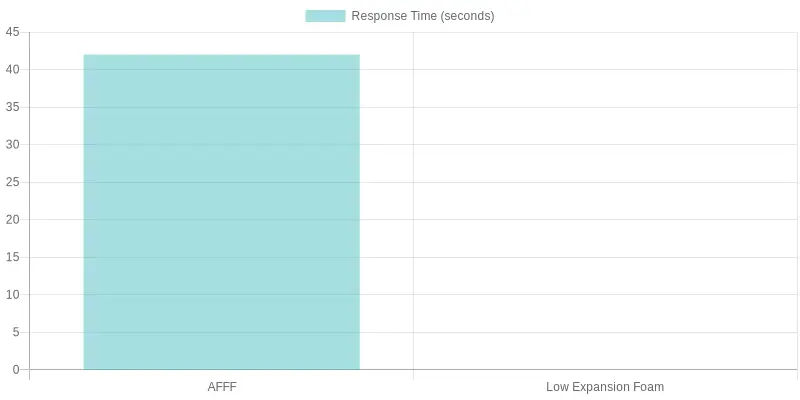
The chart above compares response times (in seconds) and effectiveness ratings (on a scale of 1 to 10) among selected foam types. Here’s a summary:
| Foam Type | Response Time (seconds) | Effectiveness Rating (1-10) | Key Performance Notes |
|---|---|---|---|
| AFFF (Aqueous Film-Forming Foam) | 42 | 9.5 | Shortest extinguishing time; effective vapor suppression. |
| F500 Foam | Not specified | Not specified | Performance varies based on application conditions. |
| Low Expansion Foam | Not directly measured | 6.5 | Effective for small fires; limited by heat resistance. |
These metrics show that the AFFF foam type provides the quickest response, making it a preferred choice for critical scenarios in the airport fire service. For more on our foam firefighting solutions, check out our fire-fighting truck products and specifically our airport fire trucks.